


Oahu Hawaii Audio Tour Guide
4.8525.00 Reviews
App Specs
- Version
- 9.2.4
- Updated On
- License
- Free
- Downloads
- 50,000+
- Developer
- Shaka Guide
- Categories
- Travel & Local
- Platform
- Android
Screenshots
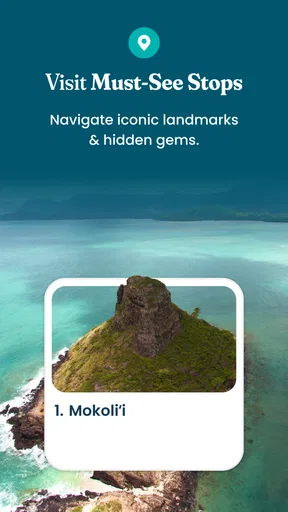
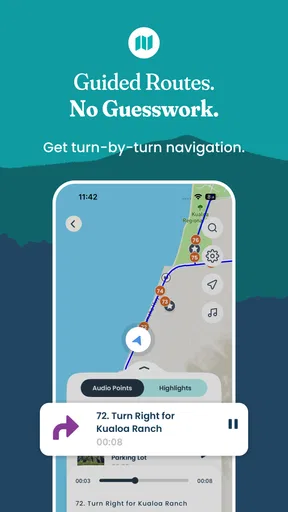
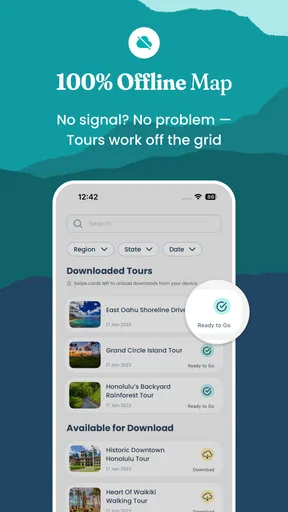

 Analysis by AppCompare
Driving around Oahu can feel like choosing between two very different kinds of trip. You can follow a conventional guidebook, search for places as you go, or pay for a human-led excursion with a fixed schedule. Oahu Hawaii Audio Tour Guide takes a more flexible route: it turns sightseeing into a self-directed experience built around maps, spoken stories, and the island’s roads. After spending time with it, I found its main appeal easy to understand. It gives you something to listen to while you explore, without asking you to stay with a tour group.
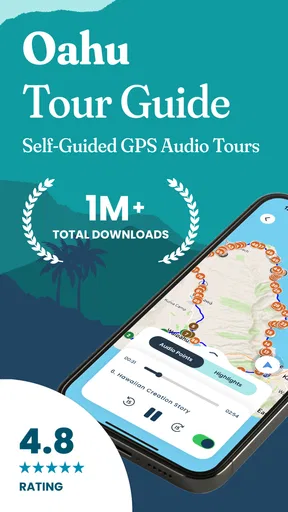
This is a travel and local app from Shaka Guide, aimed specifically at visitors exploring Oahu. It is free to install, carries an Everyone age rating, and has been available since February 11, 2016. Its current version is 9.2.4, and it runs on Android 7.0 or later. The app has built a strong audience, with an average rating of 4.8 from around 993 ratings and more than 50K installs. Those figures do not replace personal experience, but they do suggest that the basic idea has connected with many travelers.
How the guide fits into an Oahu trip
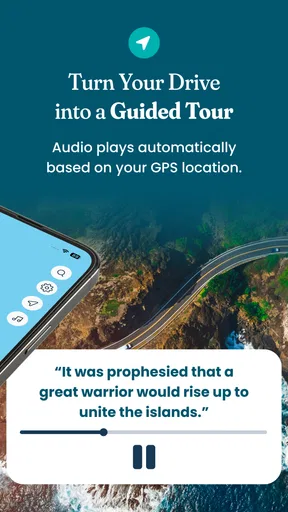
The useful distinction here is that this is not simply a list of attractions. Its purpose is to accompany movement around the island. You are not just asking, “What can I see?” You are also asking, “What should I notice while I am getting there?” That makes the app particularly relevant for road trips, scenic drives, and days when you want context without arranging a formal tour.
I like that format because Oahu is easy to experience as a sequence of stops: a beach, a viewpoint, a historic place, a food break, then another drive. Without some structure, the journey between those points can become empty travel time or a stream of rushed map checks. An audio guide can fill that space with local background and directional awareness while leaving you in control of the pace.
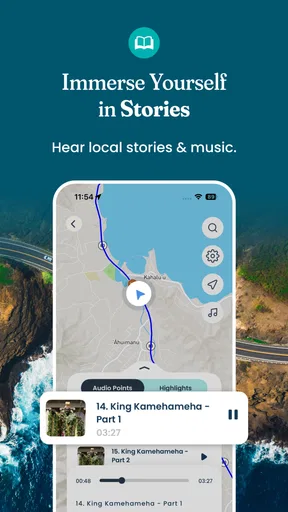
The map element matters just as much as the narration. A spoken story may be interesting, but it becomes far more practical when it is connected to where you are going. The combination helps transform a loose sightseeing plan into a route with meaning. Rather than reading several pages before leaving the hotel, I can imagine using the app as a companion that stays relevant as the day develops.
That said, it is important to understand what kind of companion this is. It does not replace a local person who can answer a specific question, change a plan because of weather, or recommend a restaurant based on a conversation. It also does not create the same social experience as joining a small group. Its strength is independence, not personal interaction.
What I would do before leaving the hotel
My first recommendation is to prepare the day before starting the car. Decide whether you want a broad island drive, a concentrated area, or a relaxed day with only a few stops. An audio guide is most useful when you have enough time to listen rather than treating it as background noise between tightly scheduled reservations.
Worth Reading Before You Choose

Flipboard Shows What News Apps Must Do Beyond the Feed

Switching to Android Auto Means Rethinking Your Driving Routine

Google Calendar Makes a Crowded Week Easier to Manage

Ludo King Makes the Most of the Minutes Between Plans

Baby Panda World Brings Quick Play to Modern Phones, but Its Game Library Feels Busy

ESPN’s Live Game View Makes Following Close Games Easier
I would also review the map and stories before setting off, even if only briefly. This gives you a sense of the route and helps you recognize when a stop is worth extra time. The non-obvious benefit is that preparation reduces the temptation to use your phone while driving. You can make decisions while parked, then return your attention to the road.
For a couple or family, this planning step also prevents a common travel problem: one person navigating, another searching, and everyone else wondering what happens next. The app can become a shared itinerary instead of one traveler’s private screen. I would nominate one passenger to manage the map and pause or resume the audio, leaving the driver out of that task entirely.
Using narration without turning the day into a checklist
The best way to use an audio tour is not to race through every suggested point. I would treat the narration as a layer over the island rather than a command to stop everywhere. If a beach is crowded, a viewpoint is uncomfortable, or the family needs lunch, the flexible format should make it easier to adapt instead of feeling that you are failing the itinerary.
There is a useful trade-off here. A structured tour can protect you from missing major sights, while a self-guided app gives you room to linger. The latter is better for travelers who dislike fixed departure times, but it requires more judgment. You still need to decide how long to stay, where to park, and whether a detour makes sense for your group.
I would pause the narration during conversations, meals, and busy arrival moments. That sounds obvious, but it changes the quality of the experience. Trying to absorb a story while searching for parking usually means remembering neither the information nor the surroundings. The app works best when used in short, attentive stretches rather than played continuously at any cost.
What the free starting point means
The app itself is free, which makes it easy to consider before committing to a paid travel activity. That is meaningful value for someone still comparing options, because you can install it without treating the download as a major purchase decision. However, free installation should not be confused with every possible tour element being free.
In-app purchases are listed from $0.99 to $399.99 per item. That is a very wide range, so I would inspect the purchase screen carefully and identify exactly what an individual item unlocks before paying. The sensible approach is to compare the price of the specific route or content you want with the cost of a conventional guided excursion, rather than assuming the cheapest figure represents the complete experience.
This is also where the app’s value depends on your travel style. If you only want a short introduction to Oahu, a small purchase may feel reasonable. If you expect a full island experience, you should look at the complete purchase options displayed in the app and consider them alongside your schedule, transport, and group size. I would not buy anything simply because I was already on vacation and felt rushed.
The free access is therefore best understood as a low-friction way to explore the format, while the paid content should be judged on how much of your actual trip it supports. A free app can still be poor value if it wastes time; a paid guide can be good value if it replaces a much more expensive activity and fits your plans. The right comparison is practical, not just numerical.
Where it can beat the usual alternatives
Compared with a printed guidebook, this app is more immediate while you are moving. A book may offer broader background and is comfortable for long planning sessions, but it cannot naturally accompany a drive with location-aware storytelling. The app’s map-and-audio approach is better when you want information at the moment a place becomes relevant.
Compared with ordinary map apps, it offers more interpretation. A standard map is excellent for reaching a destination, comparing routes, and finding services. It usually leaves the cultural and historical context to you. This guide is more appealing when the journey itself matters and you want the road to feel like part of the sightseeing.
Compared with a live tour, it wins on privacy and schedule. You can stop for photos, skip a location, take a long lunch, or change the order of the day. A live guide wins when you want questions answered immediately, when you value spontaneous local conversation, or when you do not want to manage navigation at all. Neither option is universally better.
Compared with free videos and travel blogs, the app should be more convenient during a drive because the information is organized around an outing rather than scattered across searches. The trade-off is that free online material may offer more current comments, more personal opinions, or more detail about niche interests. I would use those sources for planning restaurants and logistics, then use the audio guide for the road experience.
Three practical ways to get more from it
First, divide your day into listening windows. I would begin a segment after leaving a stop, lower the phone interaction to a passenger, and pause before entering a crowded area. This avoids the common mistake of letting narration compete with navigation, conversations, and safety decisions. It also makes the stories easier to remember.
Second, use the guide to identify priorities rather than treating every point as mandatory. Mark the places that fit your interests and leave room for unplanned discoveries. This is especially helpful for families, where a perfect adult itinerary can become exhausting for children. The app can provide structure without forcing every traveler to have the same level of enthusiasm.
Third, compare the paid option with your actual transport plan. A self-guided audio experience makes the most sense when you already have a practical way to move around Oahu. If you are staying in one neighborhood without a car or do not intend to make a sightseeing drive, paying for a driving-oriented experience may deliver less value than a walkable local activity.
A fourth tip is to make the passenger the trip editor. That person can decide whether a stop deserves more time, keep an eye on the map, and pause the story when the scenery or conversation takes priority. This small division of responsibility makes the app feel less like another travel chore and more like a shared tool.
Limitations I noticed in the concept
The biggest limitation is that self-guided travel still demands self-management. You are responsible for the route, parking decisions, timing, and the judgment to skip something. Travelers who want to sit back while somebody else handles the entire day may find a traditional excursion more relaxing.
Audio also depends on the moment. If traffic is stressful, passengers are talking, or the weather changes your plans, you may miss parts of the narration. That is not a failure unique to this app, but it is a reason not to build a tightly timed itinerary around hearing every sentence. The experience should remain useful even when you pause it often.
Another limitation is that an audio guide cannot fully replace current, practical checks. Before leaving, I would still confirm opening arrangements, road conditions, parking expectations, and any reservation requirements through appropriate current sources. The app can add meaning to a route, but it should not be your only tool for decisions where conditions may change.
There is also a question of value for repeat visitors. If you already know Oahu well and mainly want transportation, a normal map application may be enough. The stronger case is for first-time visitors, travelers who enjoy stories, and people who want a planned drive without joining a group. Experienced island travelers may prefer a more specialized source built around food, hiking, surfing, or photography.
Who should use it, and who should skip it
I would recommend this app to a visitor renting a car and wanting more than turn-by-turn directions. It suits couples who want a private tour atmosphere, families that need flexible timing, and solo travelers who enjoy learning while moving through a place. It is also a good fit for people who dislike large groups or cannot commit to a tour departure time.
It can be particularly helpful on a first full day when you are still learning how Oahu’s different areas connect. Instead of filling the schedule with disconnected pins, you can use the route as a narrative framework. That gives you enough structure to avoid aimless driving while preserving the freedom to stop when something catches your eye.
I would be more cautious recommending it to someone who is staying entirely in an urban area, has no access to suitable transportation, or wants a specialist guide for one narrow interest. A dedicated hiking resource may be better for trail planning, while a live cultural experience may be more appropriate for travelers seeking direct conversation and deeper personal guidance.
It is also not ideal for a traveler who expects the app to make every decision. The freedom that makes it attractive also creates responsibility. If your priority is maximum convenience, a planned excursion with transport and a human guide may justify its higher cost. If your priority is control, privacy, and the ability to change your mind, this format is much more compelling.
My value judgment before downloading
My opinion is favorable, but conditional. The free download makes the app an easy candidate for trip planning, and the strong user response gives it credibility as a travel companion. I especially appreciate the way it addresses the space between a bare map and a scheduled tour. It is not trying to be the whole vacation; it is trying to make the driving and sightseeing connection more informative.
I would judge any in-app purchase by the number of people using it and the amount of driving planned. For a group sharing one experience during a substantial sightseeing day, paid content may offer practical value compared with booking separate seats on a guided activity. For a short stay with only one or two nearby outings, the calculation is less convincing, and I would start with the free experience before spending anything.
The listed purchase range deserves attention because the upper end is substantial. I would never assume that a large purchase is necessary just because it appears in the app. Read each option, match it to your route, and ask whether you will realistically use it. A travel purchase is valuable only when it supports the itinerary you actually have, not the ambitious itinerary you imagined before arriving.
Final recommendation for an Oahu road day
After weighing the flexibility, the audio-and-map format, and the need for personal planning, I see Oahu Hawaii Audio Tour Guide as a strong companion for independent island exploration. It gives a road trip more shape without taking control away from you. The experience is most convincing when you already want to drive, have a passenger who can manage the screen, and prefer stories woven into the route rather than information saved for later.
I would download it before the trip, explore the available material calmly, and decide on purchases only after matching them to my planned days. I would keep a regular map and current practical information available as well, because no audio tour should carry every travel responsibility. Used that way, the app offers a useful middle ground: more engaging than navigation alone, less restrictive than a group tour, and potentially more economical than booking a full guided outing.
My verdict: try it if you want to explore Oahu at your own pace, but buy only the content that clearly fits your route and travel style. For first-time visitors with a car, it is easy to recommend. For travelers seeking a fully managed tour, specialist expertise, or a mostly stationary holiday, I would choose a different option.
Pros
- Works offline
- so you can explore without relying on mobile data.
- Self-guided pacing lets you stop
- skip
- or revisit locations anytime.
- GPS-based narration provides relevant stories as you drive around Oahu.
- Useful for travelers who prefer flexibility over fixed group-tour schedules.
- Can help discover viewpoints and landmarks beyond the busiest attractions.
Cons
- Audio quality and narration style may vary between different tour sections.
- GPS accuracy can be affected by weak signals
- tunnels
- or dense urban areas.
- Driving while listening may distract users if controls are not set beforehand.
- Some content may feel less valuable to visitors already familiar with Oahu.
- Additional in-app purchases or access limits may apply to certain tour content.
FAQs for Oahu Hawaii Audio Tour Guide
What is the Oahu Hawaii Audio Tour Guide app?
Oahu Hawaii Audio Tour Guide is a self-guided travel companion designed to help visitors explore the island at their own pace. It provides narrated information about beaches, viewpoints, historic landmarks, cultural attractions, and scenic routes. Instead of following a fixed group tour, you can listen to commentary while driving or walking and decide which locations deserve more of your time.
Does the Oahu Hawaii Audio Tour Guide require an internet connection?
Whether an internet connection is needed depends on the app’s download and offline features. It is best to install the guide and download any available tour content before leaving your hotel, because mobile coverage can be inconsistent in rural areas, along the coast, or in mountain regions. You should also charge your phone and verify that the audio works offline before starting your excursion.
Can I use the guide while driving around Oahu?
The app can be useful during a road trip, particularly when you want background stories and directions connected to the places you are visiting. However, the driver should never operate the phone, read the screen, or change settings while the vehicle is moving. Set up the route in advance, use a passenger for navigation, and follow posted signs, local traffic laws, parking rules, and safety instructions.
What places and attractions does the audio tour cover?
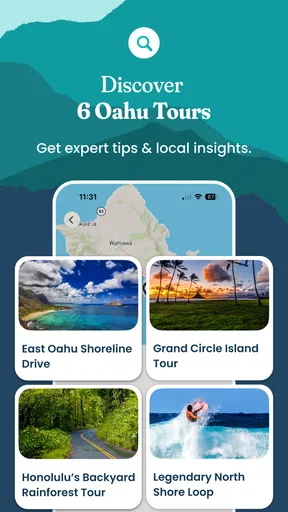
Coverage may include popular Oahu destinations such as Waikiki, Diamond Head, Hanauma Bay, the North Shore, historic Honolulu, scenic coastal roads, beaches, and culturally significant sites. The exact stops depend on the version of the tour and its route structure. Before downloading, review the attraction list, map, and tour description to confirm that the locations match your planned itinerary.
Is the Oahu Hawaii Audio Tour Guide suitable for families and first-time visitors?
The guide can be a convenient choice for families, couples, solo travelers, and first-time visitors who prefer flexible sightseeing rather than a scheduled bus tour. Narration can make long drives more interesting and provide context that may be missed when visiting independently. Nevertheless, some locations involve hiking, heat, crowds, or limited parking, so check current conditions and choose stops appropriate for your group.


